

Napoleon Bonaparte is a well-known name, especially now thanks to Ridley Scott’s new film. He divided the public opinion of his time: he was loved by many liberal intellectuals, but hated by supporters of the Old Regime.
His fame also landed in Latin America where the French general found an imitator. She was Santa Anna (February 21, 1794 – June 21, 1876), a politician and general who led Mexico during the 19th century.
But was this imitator really worthy of the appellation for which the popular crowds cheered him?
Starting from the beginning, due to family economic problems, Santa Anna’s career began with her enlistment in the Spanish army during the Mexican Revolution in 1810.
At the time, the Spanish province was gripped by a civil war between two political groups: one royalist who wanted to remain loyal to the motherland and the other who fought for independence.
Initially, Santa Anna supported the royalists: on the contrary, in the last year of the war, the ambitious soldier decided to go over to the side of the rebels.
Thus, in 1821, the two revolutionary leaders, Agustín de Iturbide and Vicente Guerrero, signed the agreement that sanctioned independence from the Kingdom of Spain.
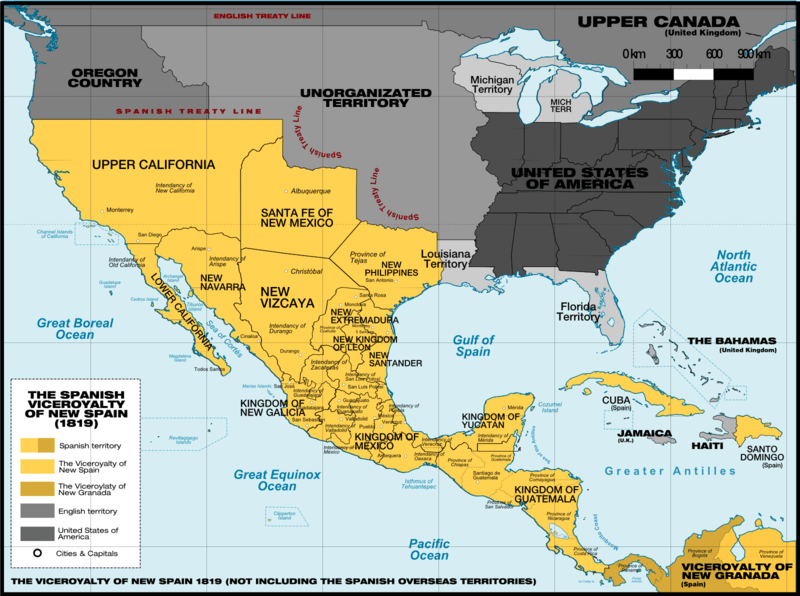
Mexico, however, will prove to be ungovernable for many years to come, mainly due to a war-torn economy, high corruption, difficulty in reconciling state and federal power, and also because of the form of state.
In fact, it will be thanks to this instability that Santa Anna will get to know Mexican politics…
The first case was on the eve of independence, when the country became a monarchical state with de Iturbide as emperor. However, the decision did not take into account the Republican component.
Santa Anna supported Iturbide, but after a year of governorship in Veracruz he decided to favor the Republican group.
Thanks to his initiative, in 1824 the emperor abdicated and Santa Anna proclaimed the birth of the United States of Mexico, a federal nation inspired by the political model of its neighbor (USA).
From that year on, it will progressively gain consensus. Mexican presidents, in fact, will unofficially always rely on Santa Anna to govern; all in exchange for prestigious positions or large sums of gold.

The situation changed only in 1829 when the same general drove the Spaniards out of the Veracruz region, proclaiming himself “Napoleon of the West”.
His popularity will become, therefore, equal to that of Napoleon after the Egyptian campaign.
So, in 1832, he overthrew President Anastasio Bustamante (“the Mexican Robespierre”) and replaced him at the helm of the country.
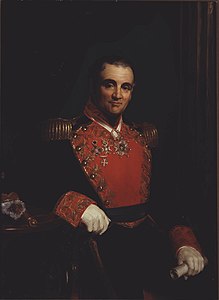
The First Presidency
It will be in this circumstance that the myth will spread throughout the nation, however, it will not take care of its obligations; it will delegate its vice-president: Valentín Farías.
The liberal reforms will then be carried out by his deputy; the general, on the contrary, will retire with his wife to his country villa.
Soon, however, everything changed: the Farías government was characterized by an open challenge to the power of the clergy and the defense of civil authority. He replaced part of the regular troops with militias and gave a great impetus to state education, putting an end to the monopoly of ecclesiastical schools.
After all the changes that took place, the church, the military, and conservative militants coalesced against the federal government.
Thus Santa Anna went over to the side of the conservatives. He returned to his office and relegated his deputy to the shadows. He abolished the reforms he had implemented and dissolved Congress to establish a centralist dictatorship in Mexico.
The new Constitution he drafted in 1836 had seven laws:
- The first established the obligation of the Catholic religion.
- The second created the Supreme Conservative Power, which could remove any of the three powers of the Republic.
- The third, fourth, and fifth organized the powers of the Union.
- The sixth stipulated the division of the territory into departments and the abolition of local legislatures.
- The seventh stipulated that constitutional laws could not be amended in a three-year period for any reason.

How, then, did the Mexicans react? Being detached from politics they remained indifferent, however 2 states rebelled.
Zacatecas was the first. St. Anne, personally fought the revolt and had no mercy; in fact, on May 23 1835 the separatist party was dissolved, the capital was emptied of its art and razed to the ground by looting and burning allowed by Santa Anna himself to his soldiers. Men, women and children will be deported.
The second state, on the other hand, will be his greatest enemy because a real revolution will be unleashed: Texas…
The campaign
Populated mainly by American settlers who emigrated in search of work, they will initially protest legally against Santa Anna, but this will be in vain…
Not being listened to and seeing the suppression of the city militias, the looting by Mexican soldiers and the abolition of slavery by Santa Anna’s decision they will eventually decide to rebel and fight for the independence of Texas.
Santa Anna reacted with a special decree declaring the rebels pirates, so there would be no status for prisoners of war!
So the “Napoleon of the West” set out to crush the rebellion. The first success of the Mexicans was at the Alamo and then at Goliad, where although in the latter the Texans had surrendered in exchange for their lives, Santa Anna himself arrived on the scene ordering that all 400 men be shot, and it was done.
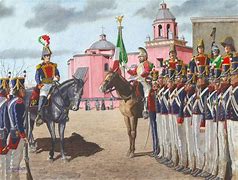
Nevertheless, an army led by General Houston will remain intact and soon the commander himself will become a dangerous rival for Santa Anna.
As Houston recounted in his memoirs, they had to keep moving and waiting. Waiting for Santa Anna, like Napoleon 20 years before at Waterloo, to make a series of mistakes that would have condemned him to defeat…
Houston was right, Santa Anna was not slow to commit them:
- The massacres carried out and the looting will turn the small revolutionary flame into a conflagration…
- The fact that he had accelerated the march of his column by completely separating himself from the rest of the army
This led to the battle: San Jacinto on April 21, 1836.
In the morning Houston retreated and Santa Anna fell into the trap: she thought of a new escape of the “cowardly rival” and so she made her last mistake: she ordered the troops to camp.
In fact, the retreat was fake, in fact, the Texans returned and seeing only a hundred soldiers at the barricade of the camp and all the others sleeping Houston shouted: “remember the Alamo, remember Goliad”.
Immediately the 2 cannons and all 930 rifles opened fire; The Mexicans panicked. In less than 5 minutes at the barricade all the gunners of the single gun were dead and the other soldiers dead, wounded or stunned.
Meanwhile, the entire Texan army set out with a frightening charge with Houston in the lead; the Mexican soldiers, the same ones who had shouted “Viva Santa Anna” at the assault on the Alamo, were now fleeing.
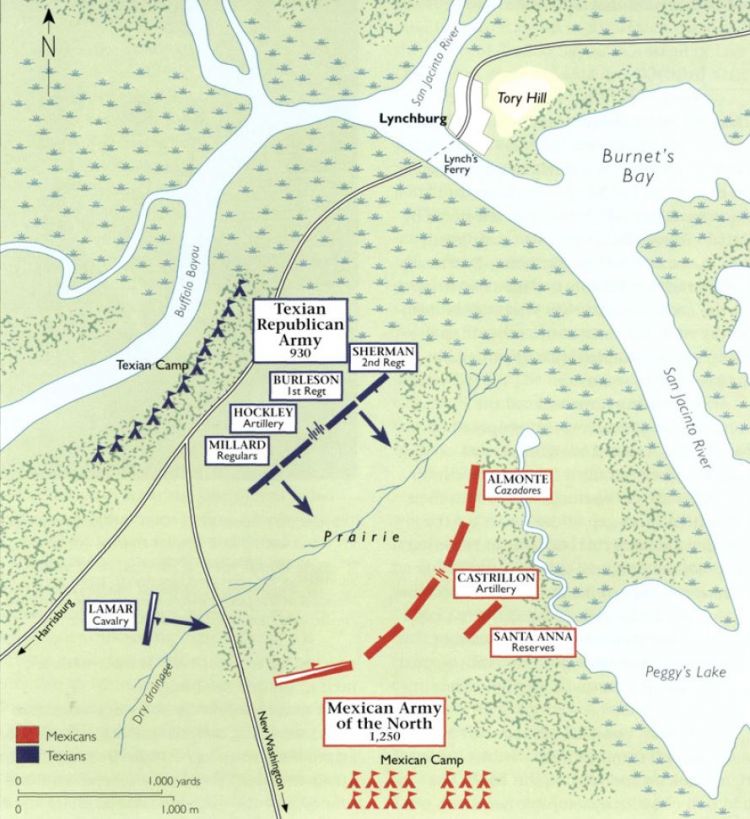
Santa Anna’s army was destroyed in 18 minutes, however thanks of the massacres carried out, even if the mexican soldiers shouted “me no Alamo”, thousands will be shot.
The losses: 570 killed and 630 Mexican prisoners; 9 killed and 23 wounded (including Houston) on the Texan side.
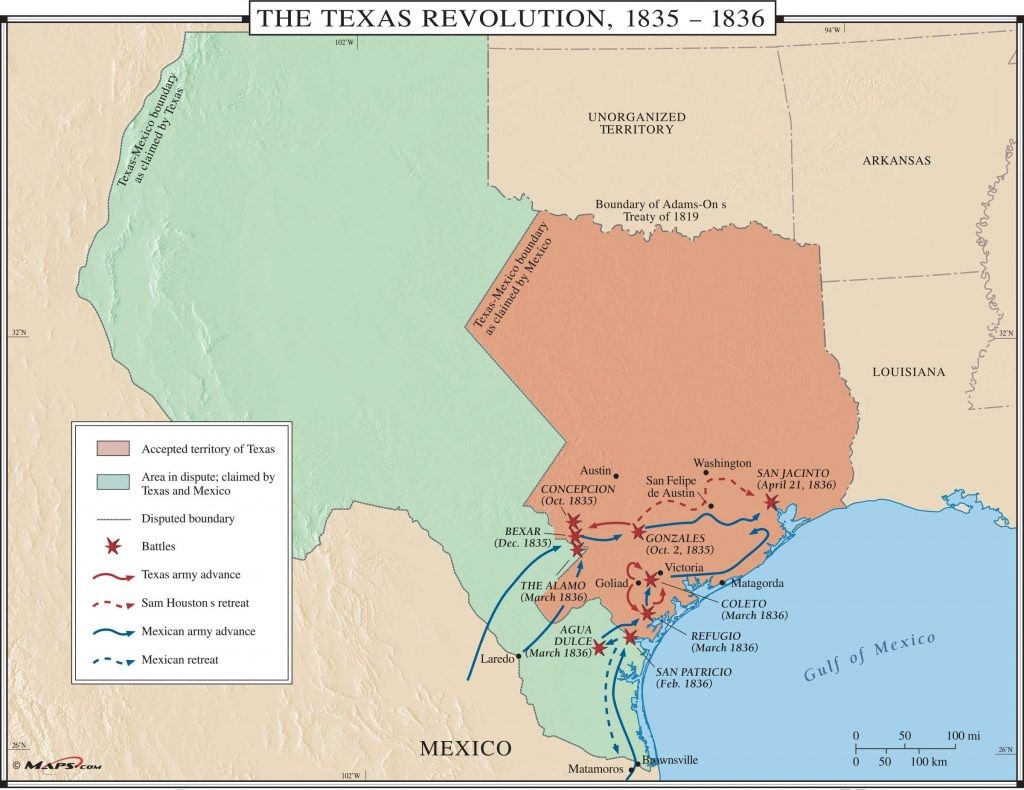
But how did the Mexican high command behave?
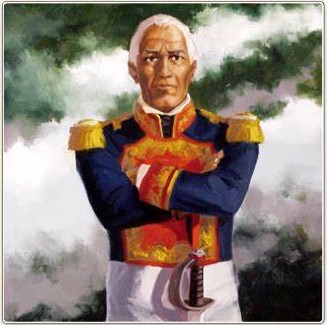
The only one who knew how to distinguish himself with great valor was General Manuel Castrillon. In fact, to the requests of his soldiers to flee he replied:
“I’ve been in forty battles and I’ve never shown my back. I’m too old to do that now.” He will die at the barricade.
And Santa Anna? Moments before the barricade fell, he galloped away, abandoning his army to its tragic fate, but was captured the next morning, disguised as a private soldier.
Thus, he negotiated with Houston and in exchange for his life, the “conqueror of the Napoleon of the West” obtained recognition of Texas independence.
The return to Mexico and the last years
Freed, he returned to Mexico where he had been dismissed, but his adventure did not end there. He was re-elected in 1841 and then overthrown. He returned, however, for the clash against the United States (1846-1848) which ended in 1848 with the Agreement of Guadalupe Hidalgo, which sanctioned the Mexican defeat.
Because of this war it will be the definitive end for the myth; however, he returned as president, with dictatorial powers, from 1853 to 1855, but then returned to exile. Benefiting from an amnesty, he returned in 1874 and died in 1876.

Today’s Remembrance
One wonders, then, how is this man remembered today?
He is remembered almost exclusively on the American continent, mostly from his American enemies; for them, especially the Texans, he was a bloodthirsty dictator as for the other American nations, because all too often he changed political sides for his own interests.
For the Mexican people, however, it is different. His memory in Mexico resembles the one french people have regarding Napoleon Bonaparte. Controversial historical figures can never be confined by one point of view, and this goes also for The Napoleon of the West.
Curated by Tommaso Bernardini
References:
Centralist Republic (Mexico) | Learnaboutworld
The Texas Revolution and the Republic of Texas (greelane.com)
Napoleon of the West, who was the Mexican general and politician? (eroicafenice.com)
Antonio López de Santa Anna – Wikipedia
 The Journal