
Between the years of 2015 and 2016, more than eleven different terrorist attacks occurred on French soil. Over 508 died and many more were injured in just under two years.
Just a few months after the shooting of Charlie Hebdo which counted twelve deaths among which the editor, four cartoonists and two journalists, France had to grieve an important second loss. In November 2015, a series of coordinated islamist terrorist attacks unfolded in the country’s capital, Paris, in the northern suburb of Saint-Denis.
Claimed by the Islamic state of Iraq and Levant (ISIL), there were six separate attacks which began around 9pm on Friday, November 13th 2015, at hand of three suicide bombers and other seven perpetrators in several locations and hotspots of the capital, among which the Stade De France, rue Alibert, and the Boulevard Voltaire at the Bataclan Theater. The overall death toll amounted to one hundred and thirty deaths and four hundred and ninety injured, making it the worst terrorist attack of the country.
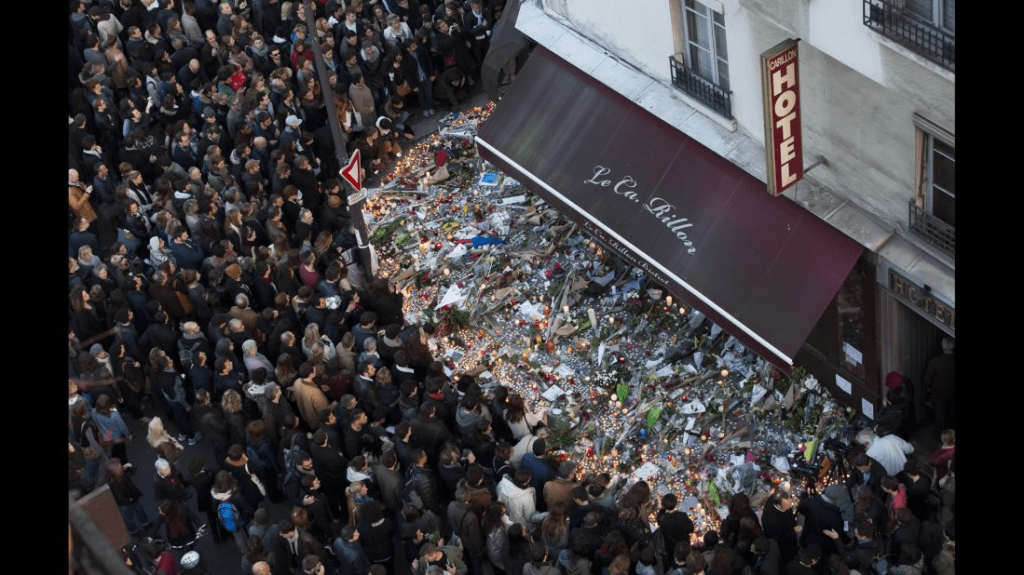
The attacks themselves were centered around the main events that the city of Paris was hosting at the time. Amongst these, an international football match was in full play at the Stade-de-France at the time of the beginning of the attacks, with more than 80,000 people attending, including the French president François Hollande and German foreign minister Franz-Walter Steinmeier. In an effort to not create more casualties outside the stadium, Hollande chose to not make a public announcement and let the match play on, as doing the opposite would’ve caused the 80,000 people to try to leave the stadium and the area as soon as possible with the only possible outcome of more death. Simultaneously, a series of shootings and bombings unfolded in the heart of Paris, targeting crowded areas known for their vibrant nightlife, such as bars and cafés.
One of the most harrowing scenes took place at the Bataclan concert hall, where the American rock band Eagles of Death Metal was performing. Armed gunmen stormed the venue, took hostages, and carried out a brutal massacre. Out of all the victims, the vast majority were killed within the first 20 minutes of the attacks. The siege at the Bataclan lasted for several hours before French security forces intervened, resulting in the death of the attackers, who had been firing on the first responders.
The group of terrorists had been coordinated and sent off by the belgian cell of the Islamic state. From this attack, only one came out uninjured: belgian-born terrorist Salah Abdeslam.
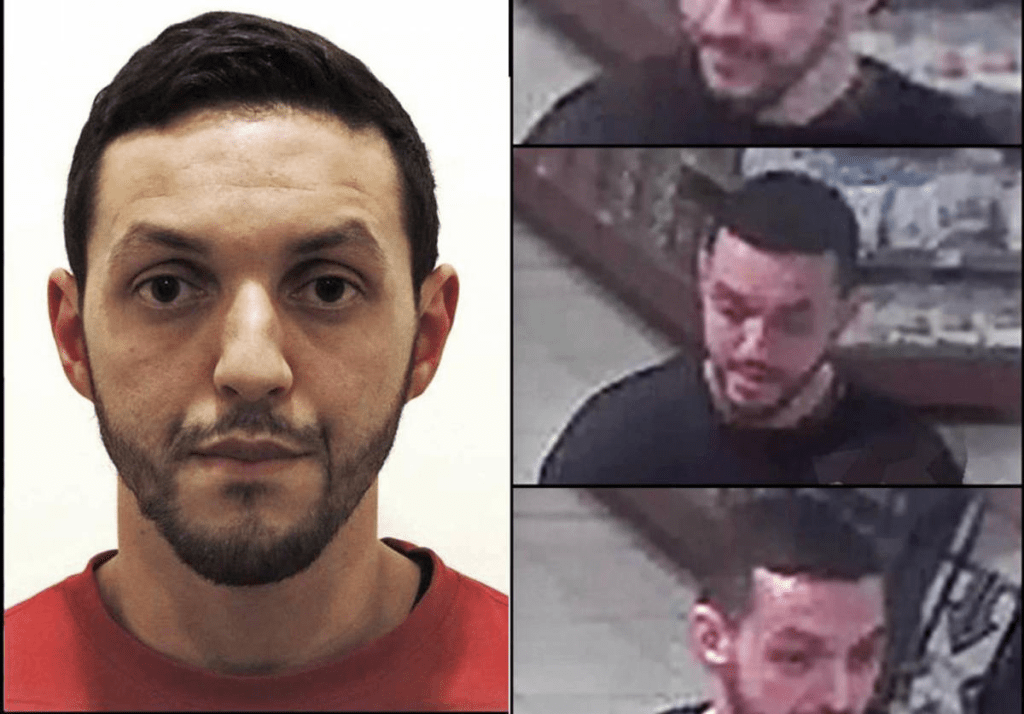
Salah Abdeslam is a now 34-year-old terrorist born on September 15, 1989, in Brussels to Moroccan immigrant parents. Abdeslam grew up in the Molenbeek district, with a childhood marked by a troubled environment and strongly impacted by socio-economic challenges and the prevalence of radical ideologies. Despite his upbringing, Abdeslam initially led a seemingly ordinary life, working in the family-owned bar. However, he later became radicalized alongside his brother, Brahim Abeslam, who also played a part in the Paris attacks, detonating his vest and killing those around him.
Salah immediately returned to Brussels following the Paris attacks and evaded the authorities for several months by hiding with two other members of the cell in Brussel’s Forest district. Once the police located the remaining members of the cell, they raided the property, which eventually led to a shootout where one member of the cell was killed and another escaped through a back window. Eventually, Abdeslam was discovered and was immediately arrested by the Belgian authorities.
His initial sentence was of 20 years in prison for his role in the shootout. However, he was also extradited to France, where he held nationality thanks to his parents, which had obtained some years prior. From Brussels, Abdeslam went on trial in Paris in 2021, six years after the events of the Bataclan took place. The trial lasted ten months, as Abdeslam had finally decided to speak–whereas he had maintained his right to silence ever since the attacks.
In an effort to alleviate his sentence from the expected level of harshness that comes with terrorism charges, Abdeslam attempted to persuade the jury to believe that he had willingly chosen to not detonate his vest right as the attacks were starting and claimed his innocence.
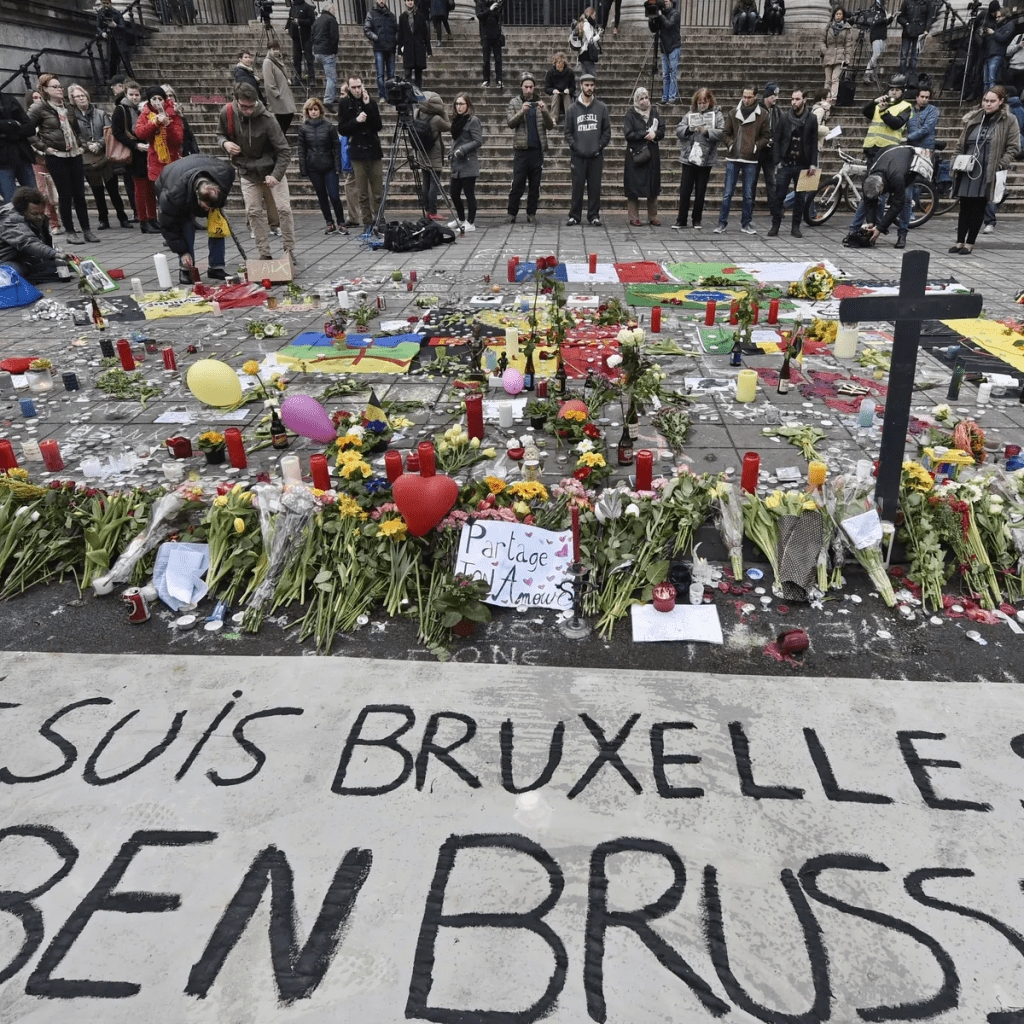
Despite his efforts, he was found guilty on all counts propped against him, being terrorism and murder, and was sentenced to a full-life term in prison. Moreover, four days after his arrest in Brussels, two suicide bombers carried out two terrorist attacks in Belgium; a bomb was detonated in Brussel’s airport of Zaventem and another bomb was detonated on a train leaving Malbeek metro station. 35 died and 340 were injured. Abdeslam was found guilty of involvement and possible participation in the planning of these two new attacks last year in July 2023, less than a year after the beginning of his second trial for terrorism, in 2022 in Brussels.
Ever since the attacks, the inmate had been detained for the most part in France, but on the grounds of human rights, his lawyers had pleaded a case for him to serve his sentence in Belgian prison, where he would be at higher proximity with his family.
Nevertheless, Salah Abdeslam’s transfer from Belgian prison to French prison had been blocked by an appeals court on human rights grounds, stating that detention in France failed to comply with the European convention of human rights by keeping him from entertaining family life. However, the Belgian federal prosecutor’s office recently confirmed the transfer and the inmate was transferred to the French authorities.

The aftermath of the November 2015 attacks prompted an intense outpouring of grief and solidarity from around the globe. The French government declared a state of emergency, and President François Hollande vowed to retaliate against those responsible for the atrocities. World leaders condemned the attacks and expressed their support for France, emphasizing the need for a united front against terrorism.
In the days that followed the attacks, French and international investigators pieced together the events leading up to the attacks and identified the perpetrators. The attackers had exploited security vulnerabilities and intelligence gaps to carry out their meticulously planned assault. The international community intensified efforts to combat terrorism, with a renewed focus on intelligence sharing and collaborative counterterrorism initiatives.
The November 2015 attacks also had profound implications for European security and immigration policies. The assailants had exploited the refugee crisis to infiltrate Europe, prompting a reassessment of border controls and a heightened scrutiny of individuals entering the continent. The attacks fueled debates on the balance between security and humanitarian concerns, leading to policy adjustments in various European countries.
France, in particular, embarked on a vigorous counterterrorism campaign, conducting raids and arresting individuals with suspected links to extremist networks. The government also extended the state of emergency and sought legislative changes to enhance security measures. The attacks served as a catalyst for broader international efforts to address the root causes of terrorism, including socio-economic factors, radicalization, and the spread of extremist ideologies.
Curated by Costanza Santillo
Sources:
 The Journal