1. Introduction
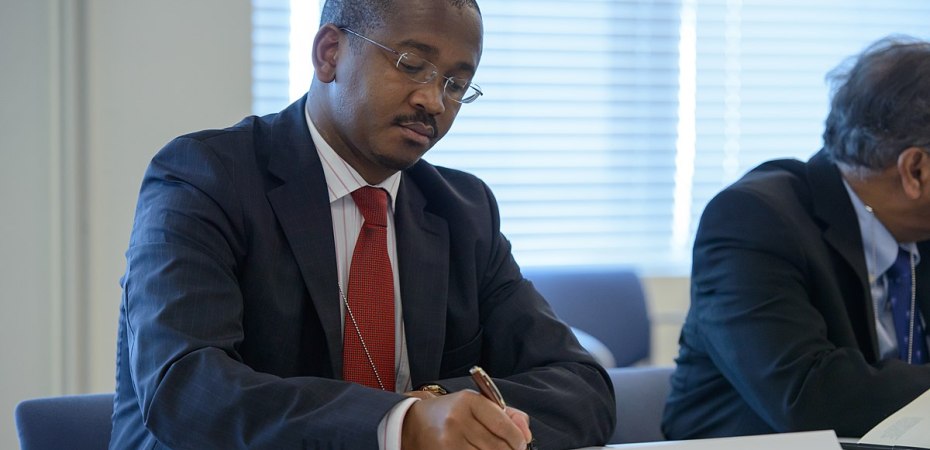
The conference held at SIOI in Rome by Ambassador Xolisa Mabhongo—BRICS Sherpa, G20 Sous-Sherpa, and Deputy Director-General for Global Governance at the South African Department of International Relations and Cooperation—provided a comprehensive reflection on the transformations of the multilateral system, the role of BRICS in the emerging global order, and the outcomes of the G20 Summit hosted by South Africa on 22–23 November 2025.
2. BRICS and the G20 in the Multicentric System
A central theme of the presentation concerned the relationship between BRICS and the G20, two bodies that, while operating according to different logics, both contribute to shaping the emerging global architecture. Ambassador Mabhongo emphasized that BRICS does not position itself as an antagonistic actor toward the G20 but rather as a group of states intervening within the existing system to guide international debate toward greater equity and representation.
BRICS’ goal is not to destabilize or disrupt the international order but to reform it from within, addressing the imbalances inherited from the post-World War II institutional framework, which continues to limit the voice of the Global South. In this perspective, reforming global governance is a strategic priority.
The areas of intervention highlighted include:
- reform of the United Nations Security Council, with a shared demand from BRICS and the African Union for expanded African representation;
- the extension of African representation to three non-permanent and two permanent seats for the continent, referring to African countries that are members or partners of BRICS;
- revision of the international financial architecture to make it more inclusive and less dependent on the established mechanisms of Bretton Woods institutions;
- strengthening of the New Development Bank (NDB), conceived not as a substitute but as a complementary instrument to traditional financial institutions, capable of supporting projects and priorities of emerging countries.
Within this framework, BRICS aims to shape the emerging multicentric order through a constructive and reformist approach that maintains existing institutions while extending their legitimacy and inclusivity.
3. Conflict Management and the African Role
Mabhongo addressed conflicts affecting the continent, including Sudan, the Sahel, Somalia, Ethiopia, and Mozambique. South Africa, in coordination with the African Union, participates in missions and initiatives on the ground, especially in response to unconstitutional changes in government.
In Mozambique, South Africa has played a particularly significant role, contributing both financially and politically to the SAMIM operation (Southern African Mission in Mozambique). Regional dynamics, including Rwanda’s initiatives and increased militarization in northern Mozambique, have been interpreted diplomatically, emphasizing the importance of cooperation and respect for national sovereignty.
According to Mabhongo, the BRICS stance on peace and security is based on a convergence of intent: promoting stability and preventing the spread of regional crises.
4. Identity, Inclusion, and Internal Contradictions within BRICS
During the discussion, questions arose regarding:
- the balance between BRICS’ identity and openness to external partners;
- the group’s ability to express a common agenda despite deep internal heterogeneity;
- tensions related to Russia’s presence on the Security Council and the war in Ukraine;
- the sustainability of expansion, given the interest of over 50 countries in cooperating with BRICS.
The speaker responded by emphasizing that BRICS is today a hybrid institution, not only political but also economic, cultural, and social, with networks of academic, agricultural, scientific, and industrial cooperation. He also noted that there are criteria and conditions for membership, including respect for international law, commitment to peace and security, and alignment with the organization’s cooperative objectives.
While internal conflicts within member states may pose challenges, Mabhongo affirmed that BRICS does not seek to unilaterally judge members’ conduct but operates within the framework of international law and multilateralism.
5. The BRICS Financial System and the Role of the New Development Bank
In response to questions about a possible alternative to the dollar, the South African representative clarified that BRICS’ goal is not to create an antagonistic system but to facilitate the use of national currencies in intra-BRICS payments.
The New Development Bank (NDB) is central to this process:
- it finances development projects in member countries;
- it supports South African initiatives, with already tangible results;
- it can also be used by non-member states, making it an inclusive platform.
6. Relations with the European Union and Multilateral Cooperation
Another part of the discussion focused on Africa–European Union relations. Mabhongo reiterated that the EU is a fundamental partner for Africa and that the relationship between the two unions is based on cooperation founded on equality. European investments in Africa continue to play a crucial role in security, stability, and economic development. According to the speaker, this cooperation is expected to strengthen further, particularly in the areas of peace and security, energy transition, and strategic infrastructure development.
7. Intervention by the Female Speaker: Climate Disasters, Food Security, and AI
A second South African speaker drew attention to several cross-cutting issues addressed by the G20 and BRICS. She highlighted the need to enhance resilience to natural disasters, especially in small island developing states and African countries most exposed to climate change effects. She also discussed capital costs and climate-related debt, emphasizing the urgency of mobilizing adequate resources to support an inclusive Just Energy Transition. A key point of her intervention concerned the strategic role of Africa’s critical minerals in the global energy transition, a resource that, if properly leveraged, could significantly contribute to the continent’s development.
The speaker further stressed the importance of strengthening food security through collaboration with United Nations agencies such as the FAO and highlighted the emerging role of artificial intelligence as a tool capable of enhancing security systems and reducing global inequalities. In conclusion, she affirmed that Africa, rich in natural and human resources, should not remain a continent marked by poverty; coherent policies and targeted investments could promote a sustainable and inclusive growth path.
8. Conclusions
The conference highlighted South Africa’s growing role as a strategic actor in multilateral diplomacy, capable of acting as a bridge between the Global South, BRICS, and the G20 in a context of profound geopolitical transformations. Ambassador Mabhongo’s and the other speakers’ interventions underscored that the stability and effectiveness of the international system depend on progressively strengthening multilateral institutions, increasing the inclusion of Global South countries, and BRICS’ ability to balance shared identity with openness toward external partners.
The South African contribution focuses on promoting constructive and inclusive reforms that strengthen global governance without undermining existing institutions, integrating objectives of peace, sustainable development, and climate resilience into the international agenda. Within this framework, South Africa aims to consolidate its position as a responsible mediator, capable of facilitating cooperation and dialogue among diverse regions and actors of the global system, promoting pragmatic solutions to common challenges.
 The Journal