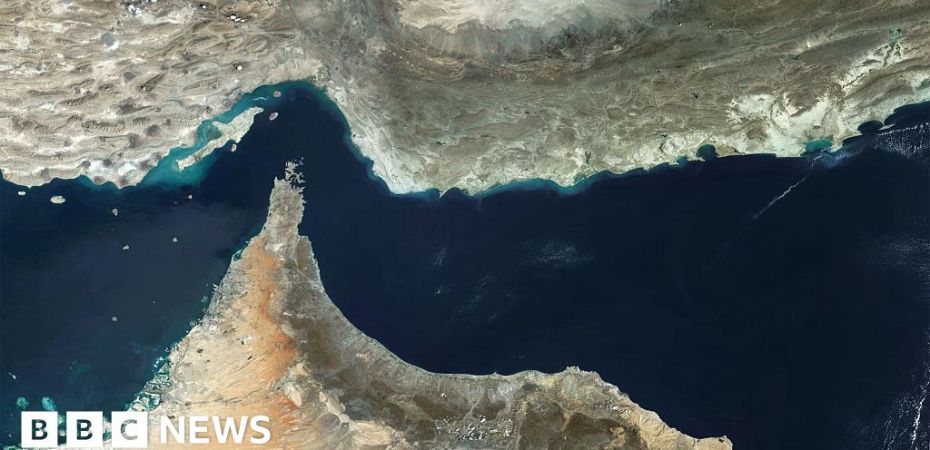
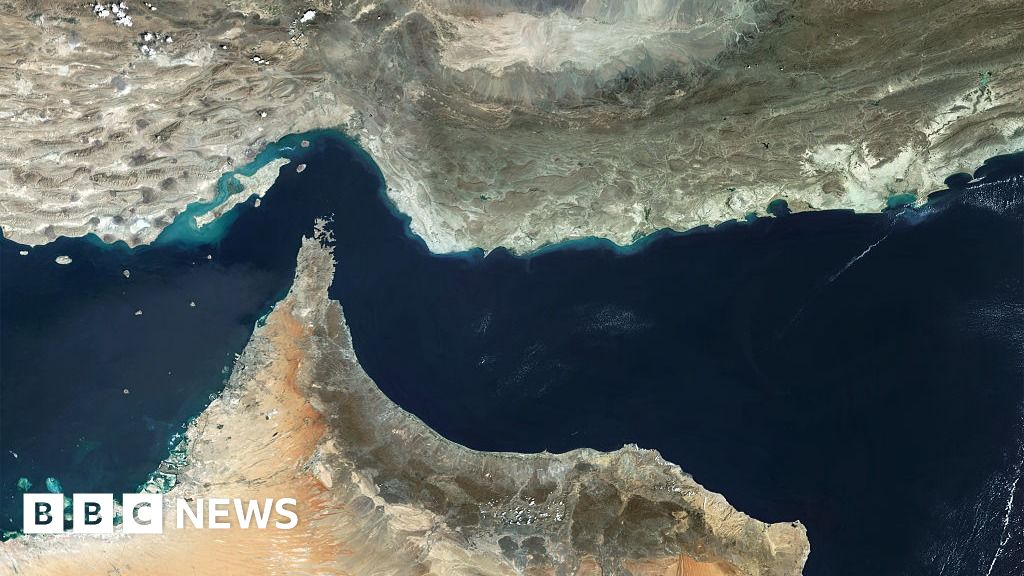
The Strait of Hormuz has never been a neutral passage. Long before becoming the backbone of the global energy system, it was a contested and militarised space, marked by repeated cycles of crisis and strategic signalling. During the Iran-Iraq War, the so-called “Tanker War” turned the Strait into a battlefield. Both sides targeted oil shipments in an attempt to damage each other’s economies. Despite the intensity of the conflict, the strait was never completely closed. Instead, it became more dangerous, commercial traffic continued under constant threat. This pattern has persisted over time. From the 2011–2012 nuclear crisis to the reimposition of sanctions after the US withdrawal from the Iran deal in 2018, Iran has repeatedly threatened to close the Strait without actually doing so. More recent episodes, including tanker seizures and attacks between 2019 and 2025, have reinforced this dynamic. We can understand: the strategic value of Hormuz lies not in its closure, but in the believable possibility of disruption. The Strait has turned into a space where uncertainty acts as a tool of deterrence. This allows regional actors to exert influence far beyond their immediate geographic reach.
Why Hormuz Matters: The Anatomy of a Global Chokepoint
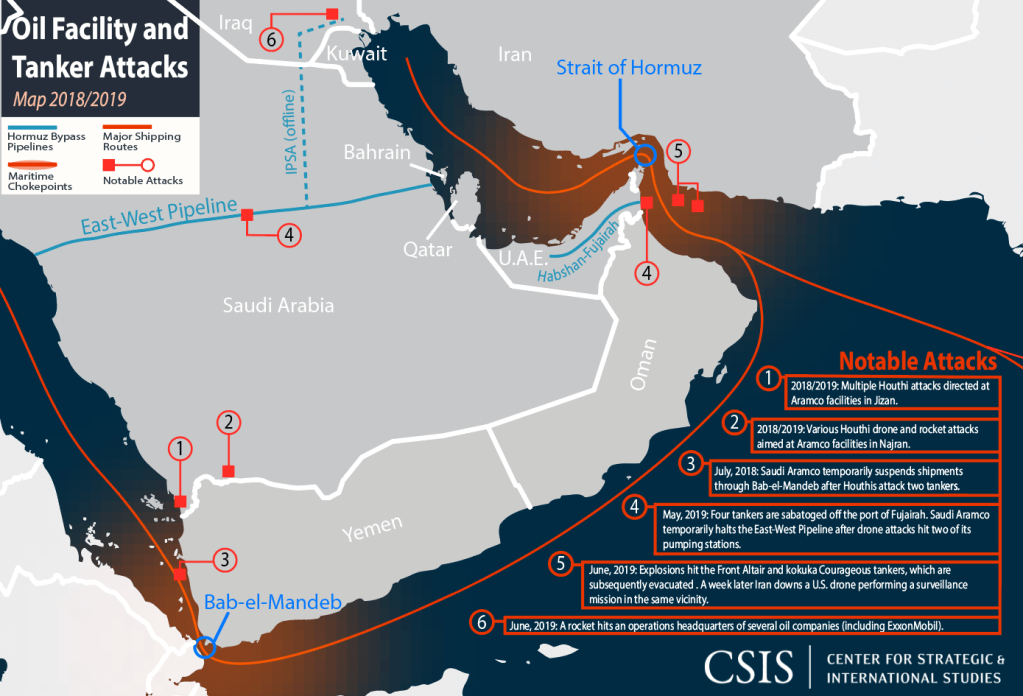
Located between Iran and Oman, the Strait of Hormuz is the world’s most critical maritime chokepoint for energy flows. At its narrowest point, it measures only 39 kilometers wide, yet it serves as the primary gateway between the Persian Gulf and global markets. Its importance is difficult to estimate. In 2024 alone, approximately 20 million barrels of oil per day transited through the Strait, making up nearly one-fifth of global consumption. Additionally, around one-third of the world’s liquefied natural gas (LNG) exports travel through this corridor. For major producers such as Saudi Arabia, Iraq and the United Arab Emirates, Hormuz is the key route to international markets. What makes Hormuz particularly strategic, however, is not just the amount of trade it handles, but its structural irreplaceability. While alternative routes exist in theory, such as pipelines that bypass the Strait, their capacity remains limited and not enough to cover for a large-scale disruption. As a result, the global energy system remains highly focused on it. This creates a fundamental vulnerability. A disruption in Hormuz would not simply affect regional exports, but also send shockwaves through global markets, driving up energy prices, increasing production costs, and raising inflationary pressures worldwide. In this sense, the Strait represents a classic example of how interdependence can turn into systemic risk: the more the global economy relies on it, the more exposed it becomes to instability.
Strategic Control: Iran’s Asymmetric Advantage
Although no single state has formal control over the Strait of Hormuz, Iran exercises a level of influence that far exceeds its legal jurisdiction. While the waterway is shared with Oman, Tehran’s geographic position and military stance give it a significant strategic advantage. This influence is rooted first and foremost in geography. Iran controls seven of the eight major islands within the Strait, including the strategically significant Abu Musa and the Greater and Lesser Tunbs. These positions allow Tehran to project power directly over key shipping lanes, effectively positioning military assets at the heart of one of the world’s busiest energy corridors. In addition to its geographic advantage, Iran has developed a complex asymmetric warfare strategy designed to deny or disrupt access to the Strait. The Iranian Navy, alongside the Islamic Revolutionary Guard Corps (IRGC), maintains a dense network of anti-ship missiles, naval mines and fast-attack vessels along its coastline. Rather than seeking traditional naval dominance, this setup aims to raise the costs of transit and create ongoing uncertainty for commercial and military actors alike. Importantly, Iran’s leverage does not rely on complete control of maritime traffic. While most deep-water shipping lanes used by large tankers technically lie in Omani territorial waters, Tehran often conducts surveillance operations and military exercises that allow it to monitor and, if needed, interfere with transit. This enables Iran to shape the operational environment of the Strait without formally closing it. The outcome is a form of “control without ownership”: Iran does not need to dominate Hormuz to influence its functioning. By maintaining the capacity to disrupt flows at relatively low cost, it transforms geographic proximity into strategic leverage, using the Strait as a tool of coercion and deterrence in its broader regional and international strategy.
The Strait Today: Controlled Access and Selective Disruption
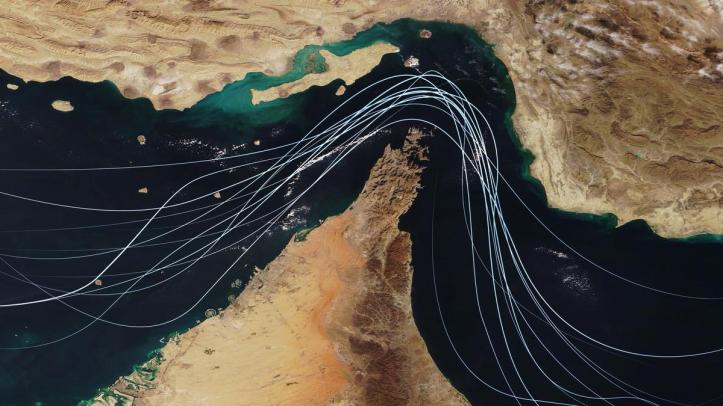
Recent developments suggest that how the Strait of Hormuz operates its dynamics may be evolving, shifting from a contested yet open waterway towards a more selectively regulated corridor shaped by political and security considerations. Following the escalation of tensions involving Iran, the United States and Israel, maritime activity in the Gulf has become increasingly volatile. Reports of tanker seizures, targeted attacks and more pressured naval presence have contributed to a growing perception of risk among countries with some vessels delaying or rerouting transit. However, Iran has stopped short of attempting a full closure of the Strait. Instead,they opted for a more calibrated approach. Statements communicated to the International Maritime Organization indicate that “non-hostile vessels” may be allowed to transit under certain conditions, suggesting the emergence of a more discretionary and politically conditioned system of access. While the extent of this practice remains unclear, vessels linked to countries maintaining relatively stable relations with Tehran, such as China, India or Turkey, have faced fewer disruptions compared to others. While this falls short of a formalised regime of control, it reflects an increasing willingness to differentiate access based on political alignment. This potential shift is significant: rather than relying solely on threats or episodic disruption, Iran appears to be experimenting with more selective forms of influence over maritime flows. In this context, control is exercised not through outright denial of access, but through the ability to shape risk, signal intent, and condition behaviour.
US Position and the Risk of Forced Reopening
Recent statements by Secretary of State Marco Rubio highlight how the Strait of Hormuz has become central to broader geopolitical confrontation. In a March 30, 2026, Al Jazeera interview, Rubio stated that the Strait would “reopen one way or another” after hostilities end, implying US-led diplomatic or military action with partners. This reflects a critical escalation dynamic. While Iran relies on controlled disruption and selective access, the US views the Strait as a non-negotiable global commons, ready to enforce navigation. Hormuz is thus evolving from regional flashpoint to potential great-power clash. Moreover, the implicit threat of forced reopening underscores Iran’s leverage limits. Sustained restrictions could provoke a coalition response, echoing Trump’s warnings on energy targets, turning asymmetric advantage into overreach.
Global Dependence: Exposure Without Control
The strategic importance of the Strait of Hormuz is not distributed equally. While control over the waterway is geographically concentrated, dependence on its uninterrupted functioning is global, and particularly in Asia. In 2024, the vast majority of oil and gas flows transiting Hormuz were directed towards Asian markets. China alone accounts for a substantial share of these imports, receiving roughly 45 percent of its oil through the Strait. Alongside China, major economies such as India, Japan and South Korea rely heavily on Gulf energy to sustain their industries, transport networks and electricity generation. This creates a structural imbalance. The countries most dependent on Hormuz have limited power to influence its security, while those with the greatest ability to disrupt it, most notably Iran, are not the primary beneficiaries of its stability. The United States, while less dependent on Gulf energy than in past, remains the principal security provider in the region, maintaining a strong naval presence to guarantee freedom of navigation. Meanwhile, external actors such as China, whose economic exposure is much greater, have so far avoided taking a similar security role. This imbalance highlights a key characteristic of the Strait: power and vulnerability do not align. Instead, Hormuz exists at the crossroads of global interdependence and fragmented security responsibilities, making it a persistent source of geopolitical tension.
Economic Consequences: From Energy Shock to Systemic Risk
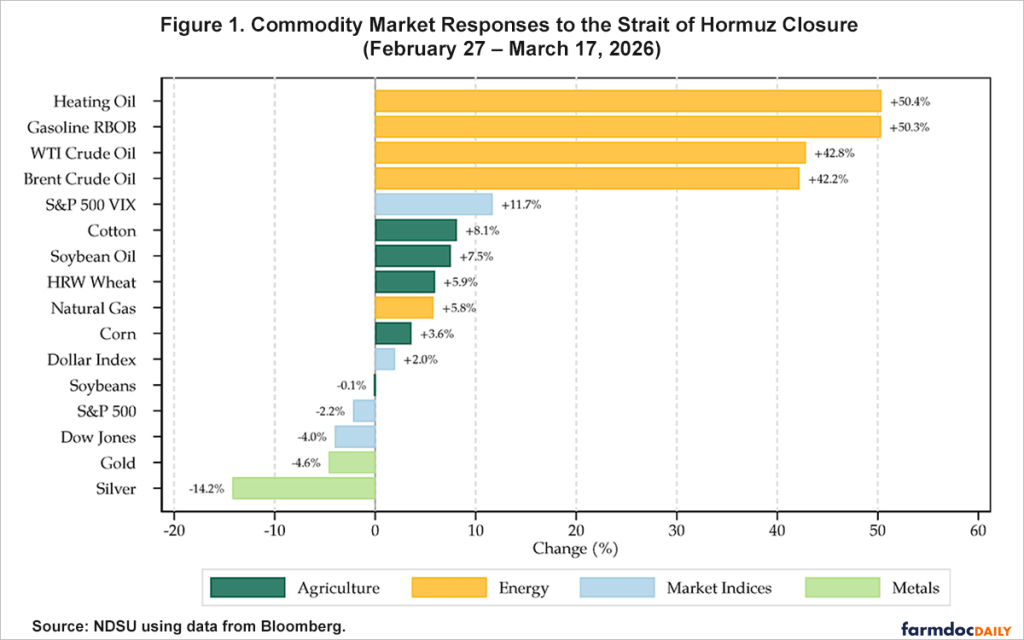
Any significant disruption to maritime traffic through the Strait of Hormuz would have immediate and widespread economic impacts. Given the volume of oil and gas that transits through the corridor, even a minor restriction would likely trigger a sharp increase in global energy prices in the short term. Experts have consistently warned that there are no alternative sources capable of compensating for a large-scale disruption in Gulf supply, especially since a significant share of spare production capacity within OPEC+ is located in the region. As a result, a prolonged crisis could push oil prices well beyond $100 per barrel, with cascading effects across global markets. The impact would extend beyond the energy sector. Higher fuel costs would lead into increased production and transportation expenses, forcing companies to pass these costs along supply chains and ultimately onto consumers. This, in turn, would intensify inflationary pressures at a global level, particularly in energy-importing economies. For countries in Asia, already highly exposed to Hormuz, the consequences would be especially severe. Disruptions to energy flows would directly affect manufacturing output, export capacity and overall economic growth. In this sense, a crisis in the Strait would not remain confined to the Gulf, but would rapidly evolve into a systemic shock affecting the global economy as a whole.
Can Hormuz Be Bypassed? The Limits of Alternatives
Given its strategic vulnerability, Gulf producers have long sought to reduce their dependence on the Strait of Hormuz by investing in alternative export routes. Saudi Arabia and the United Arab Emirates, in particular, have developed pipeline infrastructure designed to bypass the Strait and connect oil fields directly to ports on the Red Sea or the Gulf of Oman. However, these alternatives remain structurally limited. Pipeline capacity is insufficient to handle the full volume of exports that would otherwise transit through Hormuz, and logistical constraints further reduce their effectiveness in the event of a large-scale disruption. The challenge is even more pronounced in the case of liquefied natural gas (LNG), particularly from Qatar whose exports rely almost entirely on maritime transport through the Strait. Unlike oil, LNG infrastructure is far less flexible, making rapid rerouting extremely difficult. As a result, while alternative routes may mitigate the impact of disruptions, they cannot replace Hormuz. The global energy system remains deeply dependent on a single maritime chokepoint, reinforcing the structural vulnerability at the heart of the system.
Conclusion: A System Built on a interdependence
The Strait of Hormuz is often called a key energy route, but that description doesn’t capture its full geopolitical importance. It’s more than a shipping lane, it’s a strategic tool that regional powers, especially Iran, can use to influence the global economy. Its significance comes not just from the amount of oil passing through, but from the risks concentrated in such a narrow space. Since a large share of the world’s energy depends on this single route, vulnerability is built into the system. Recent events show that controlling Hormuz doesn’t require full ownership or closing it entirely. Simply being able to disrupt, regulate, or limit access can have worldwide effects. The Strait shows a key paradox of globalization: the more connected the world is, the more it relies on crucial points it cannot fully protect. Hormuz is not just a chokepoint, it clearly exposes this fragility. In short, Hormuz is more than a weak spot in the global system. It is a tool of geopolitical power, and how it is managed will strongly affect global energy stability.
By Cristina De Luigi
Sources:
Iran-US tensions: What would blocking Strait of Hormuz mean for oil, LNG? | Explainer News | Al Jazeera
Why is the Strait of Hormuz so strategically important? | Business and Economy | Al Jazeera
https://www.ft.com/content/71c3295a-531a-4fa8-86bc-964b5bb821e2?syn-25a6b1a6=1
 The Journal